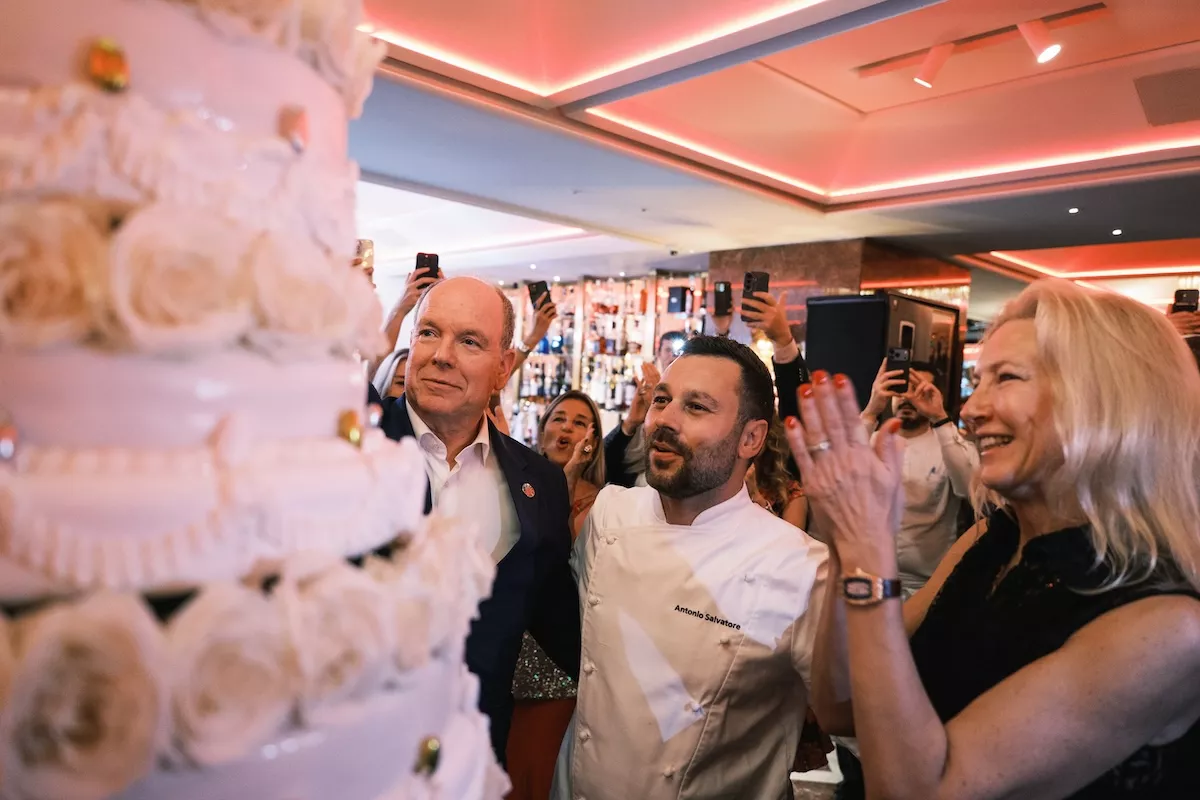
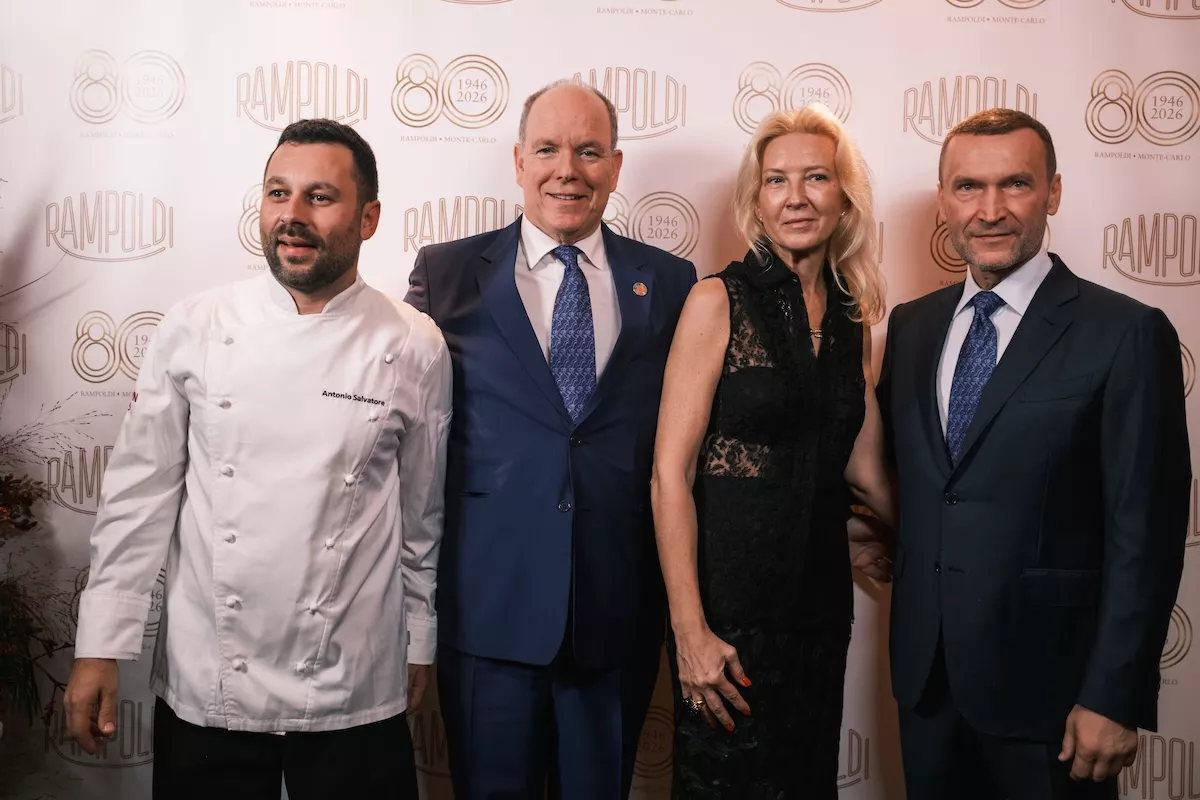
Prince Albert II joined a packed restaurant of regulars, partners and well-known faces from Monaco and abroad as Rampoldi marked its 80th anniversary on Thursday 15th October, with Italian soul and jazz singer Mario Biondi performing and the restaurant’s own producers serving guests throughout the evening.
The Prince’s arrival was greeted warmly by the room, and he stayed for some time, a reflection of the long-standing ties between Rampoldi and the Princely family. Founded in 1946, Rampoldi has been part of Monte-Carlo’s dining scene for eight decades, and it celebrated its 75th anniversary in similar style five years ago.
Producers at the table
In keeping with chef Antonio Salvatore’s belief that great cooking starts with the ingredient, the restaurant invited its suppliers, most of them from Italy, to cater the evening. Rather than a traditional service, the producers spent the night offering tastings directly to guests, explaining where their products come from and how they are made.
Biondi, known for his distinctive deep voice, provided the soundtrack to the celebration.
A double milestone for the chef
The anniversary also marks a personal milestone for Salvatore, who this year turns 40 and celebrates a decade at the helm of Rampoldi. Since arriving in Monaco in 2016, he has opened La Table d’Antonio Salvatore within the restaurant, which has held a Michelin star since 2021, and taken the brand across the Atlantic with Rampoldi New York in 2023.
“Celebrating Rampoldi’s 80 years means thanking everyone who brought this house to life before us, and everyone who keeps it alive today. Tonight, the Prince, our guests, our producers and our teams all came together to celebrate this historic anniversary,” said Salvatore.
Monaco Life is written by qualified journalists, writing original content. Sign up for our free newsletter, listen to our podcasts on Spotify, and follow us across Facebook, Instagram, LinkedIn, and Tik Tok.
Photos: Lorenzo Carone / Rampoldi Monte-Carlo
Prince Albert II and Princess of Hanover honour Prince Pierre Foundation laureates
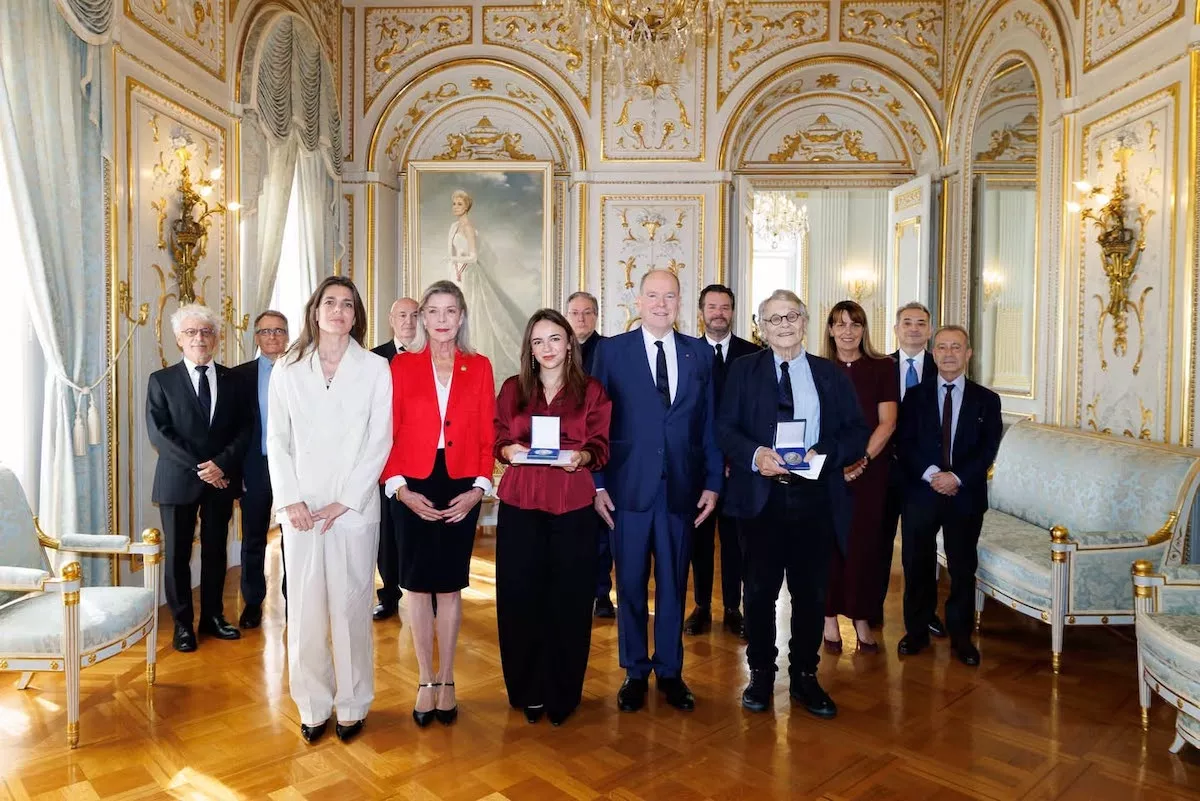
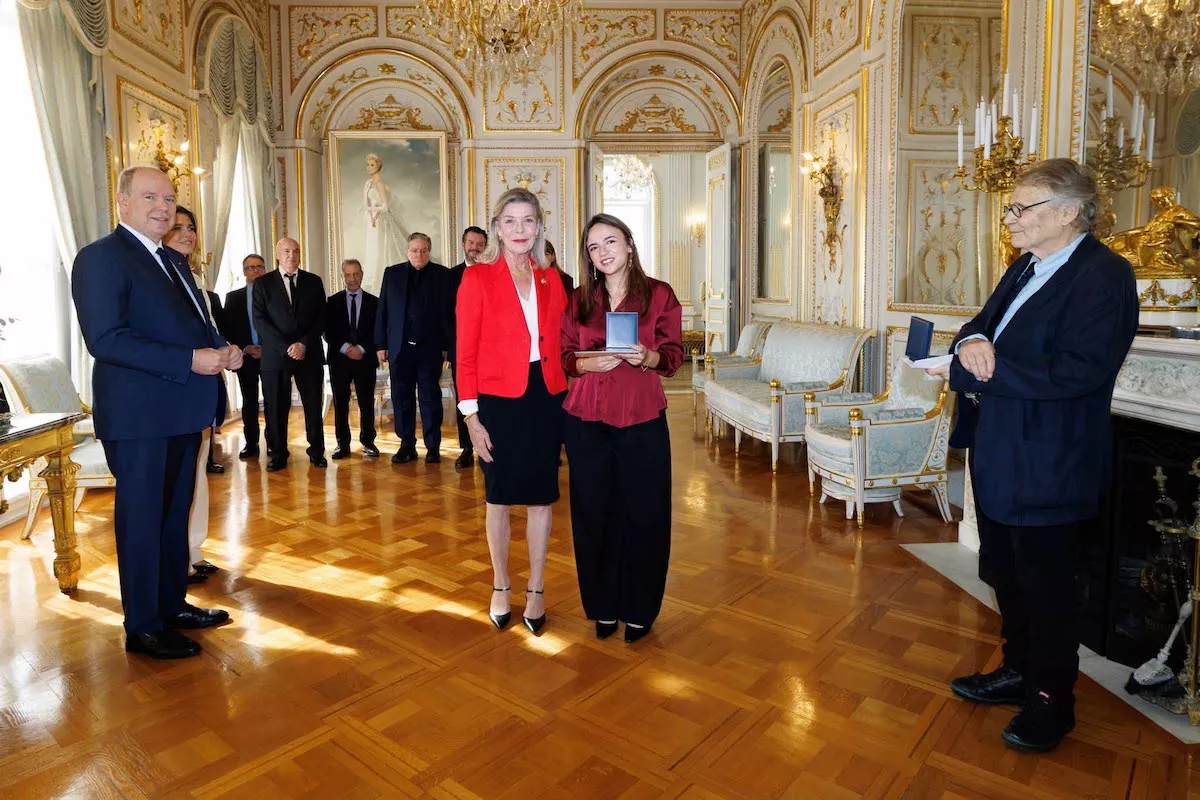
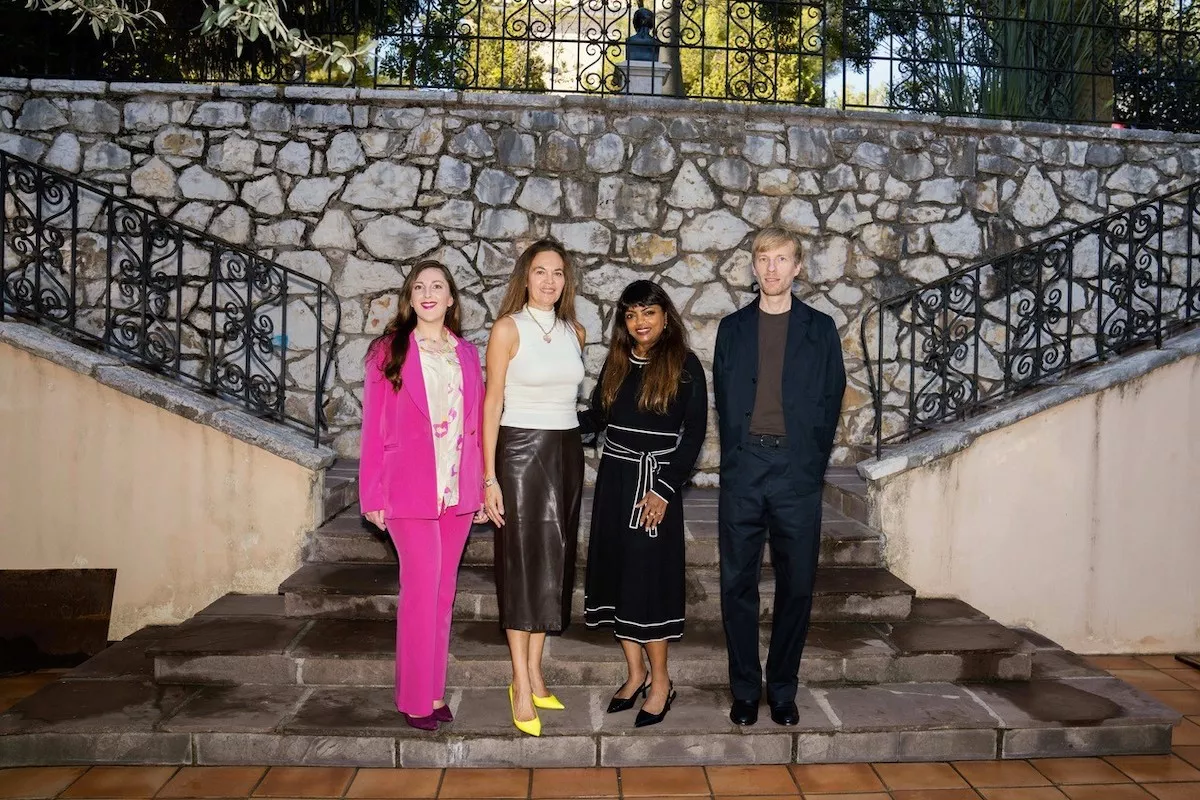
Prince Albert II and the Princess of Hanover, accompanied by Charlotte Casiraghi, welcomed the winners of the Prince Pierre de Monaco Foundation Awards to the Princely Palace on Wednesday 14th October.
During the official ceremony, the Prix Littéraire was awarded to French author Daniel Pennac in recognition of his life’s work. Soundouss Chraïbi received the Bourse de la Découverte for her debut novel, Le soleil se lève deux fois (The Sun Rises Twice).
Established in 1966 by Prince Rainier III in memory of his father, Prince Pierre de Polignac, the Prince Pierre de Monaco Foundation promotes contemporary artistic and literary creation. Presided over by the Princess of Hanover, the Foundation’s Literary Council evaluates candidates annually.
The Princess of Hanover with novelist Soundouss Chraïb. Photo credit: Michaël Alesi / Palais princier
The Prix Littéraire was created in 1951 and remains a major distinction in French-language literature, honouring established authors for their complete body of work. Past recipients include Marguerite Yourcenar, J.M.G. Le Clézio, Annie Ernaux, and Patrick Modiano.
The Bourse de la Découverte was established in 2001 to mark the 50th anniversary of the Literary Prize, offering recognition and support to emerging voices publishing their first work of fiction.
Through these distinctions, the Princely Family continues to support contemporary literature and encourage creative voices across the Francophone world.
The Chambre Monégasque de la Mode has concluded the inaugural edition of ‘Monte-Carlo Fashion Week Rendez-Vous’, marking a strategic transition to hold Monte-Carlo Fashion Week twice annually. Organisers confirmed that the 15th main edition of Monte-Carlo Fashion Week will take place from 12th to 16th April 2027.
The three-day event, which took place from 14th to 16th October in the Principality focused on sustainable practices, local craftsmanship, and international dialogue across the fashion and luxury sectors. Moving forward, the organisation plans to hold autumn-winter and spring-summer showcases at six-month intervals, establishing a permanent dual-season calendar.
“Our objective is to continue promoting talents and visions that can have a positive impact on the entire fashion system, to support Monegasque designers, and to make Monaco a leading platform for dialogue between fashion, sustainability, and innovation,” said Federica Nardoni Spinetta, President and Founder of the Chambre Monégasque de la Mode.
Sustainable practices and international panel discussions
Sustainability formed a central theme of the autumn programming, highlighted by a panel debate addressing whether fashion can genuinely achieve sustainable standards.
Chaired by Léa Calori of the Princely Government’s Communication Department, the discussion featured Runa Ray, an environmental stylist and circular economy expert working alongside the United Nations and the Prince Albert II of Monaco Foundation. The panel also included Thierry Leviez, Director of Pavillon Bosio, who presented Théâtres de la Mode, a publication examining fashion scenography from the 19th century to the present day.
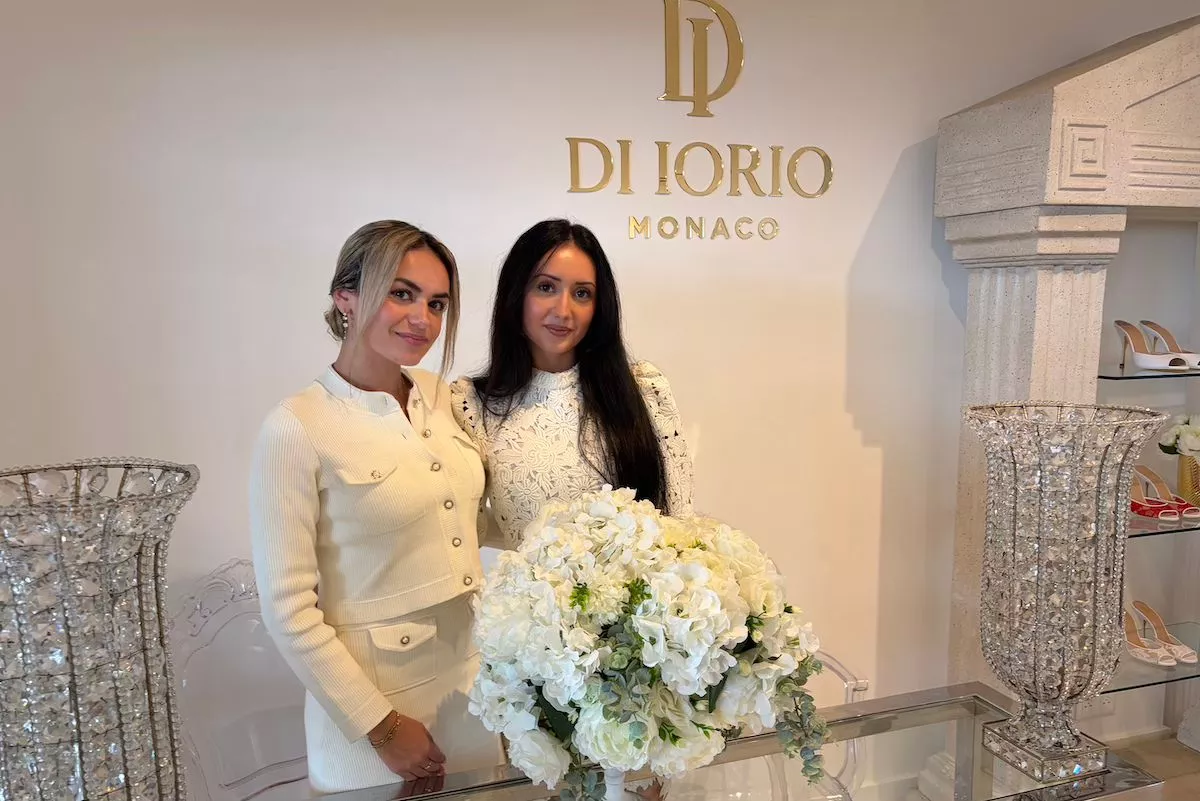
Alicia and Samantha Di Iorio at their new boutique at the Fairmont Hotel. Photo credit: Virginia D’Umas
Spotlight on local houses and retail expansion
The event provided a platform for both established and emerging local labels, marked by notable brand showcases and retail developments across the Principality.
Luxury footwear brand Di Iorio Monaco, founded by sisters Samantha and Alicia Di Iorio, opened its boutique at the Fairmont Monte-Carlo on Wednesday 14th October. Officially launched seven months ago, the brand marks its ongoing retail presence after initially debuting its collection at Monte-Carlo Fashion Week in April in collaboration with ‘Beach & Cashmere Monaco’. Both founders studied at IUM in Monaco, and one of them also completed a law degree. Commenting on the unique dynamic of running a business together, they explained: “Working as sisters gives us the freedom to be completely direct in ways we might not be with others.”
Retail operations for the label are based in Italy, with sizing extending up to a maximum of European size 42.
“The pink is for femininity and elegance, but from a Monaco perspective. It is more feminine and less in-your-face. The choice of pink is also about self-confidence, to bring that sense of self-assurance to every woman who wears it,” said Alicia Di Iorio, explaining the decision to feature pink soles as the brand’s signature aesthetic.
Furthermore, each footwear design is named to reflect a distinct identity, beginning with the brand name followed by a specific location. As Alicia Di Iorio explained in an interview with Monaco Life, models such as ‘Team Monaco’, ‘Milano’, and ‘Hollywood’ tie each creation to an international city or local heritage.
Meanwhile, Monegasque eyewear house Valtoria hosted press and industry clients at its atelier and showroom, where designer Gabriela Tarkanyi Maldonado presented the label’s latest eyewear designs.
In addition, Italian label Falconeri presented its current collections alongside pre-owned luxury accessory specialist TheRe at a dedicated pop-up venue within the Fairmont Monte-Carlo.
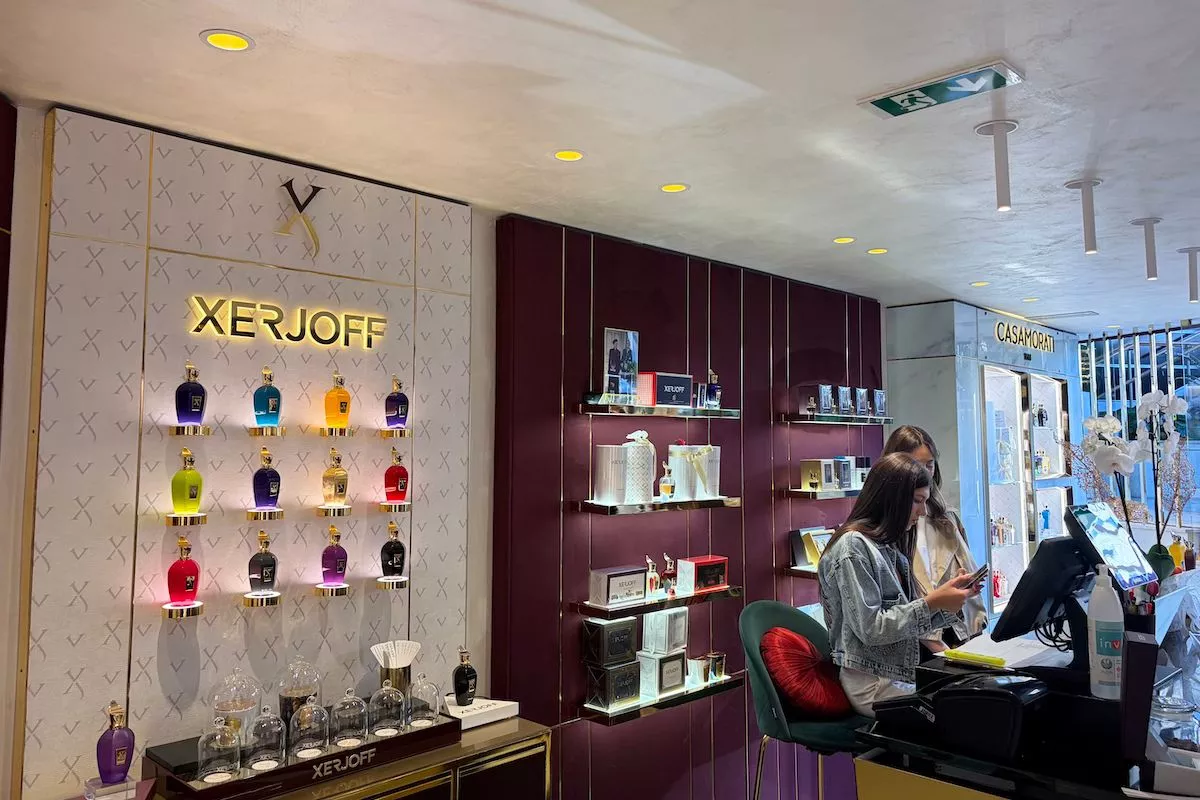
Xerjoff boutique at the Fairmont Hotel. Photo credit: Virginia D’Umas
Xerjoff: Artistic perfumery and global expansion
Sensory and lifestyle elements were integrated throughout the three days, including presentations by Italian luxury fragrance house Xerjoff. Operating its flagship store in Monaco for the past five years, Xerjoff is an artistic perfumery founded approximately 20 years ago in Turin by Sergio Momo, an interior designer who translated his passion into enterprise. Known for cross-sector collaborations spanning music icons like Tony Iommi, Black Sabbath, and Duran Duran, as well as automotive partnerships with Lamborghini, the house blends multisensory integration with fine craftsmanship.
The brand operates 13 flagship stores worldwide and distributes across 140 countries. Highlighting its latest festive milestone, Xerjoff introduced its 12-day advent calendar release titled ‘Primi 20‘, commemorating the company’s first two decades with an exclusive calendar perfume.
With the success of its first autumn edition, the new biannual schedule positions Monaco as an active year-round contributor to the global fashion circuit. Industry insiders and design houses alike now look ahead to April 2027 for the official 15th anniversary edition.
The world is on course for 2.8°C of warming this century under current policies, the United Nations said on Wednesday, a projection that comes after the Mediterranean recorded its hottest summer on record. For scientists in Monaco studying the sea’s most fragile species, the warning reflects what they are already seeing: marine life pushed beyond the temperatures it can tolerate, and fewer and fewer years in which to recover.
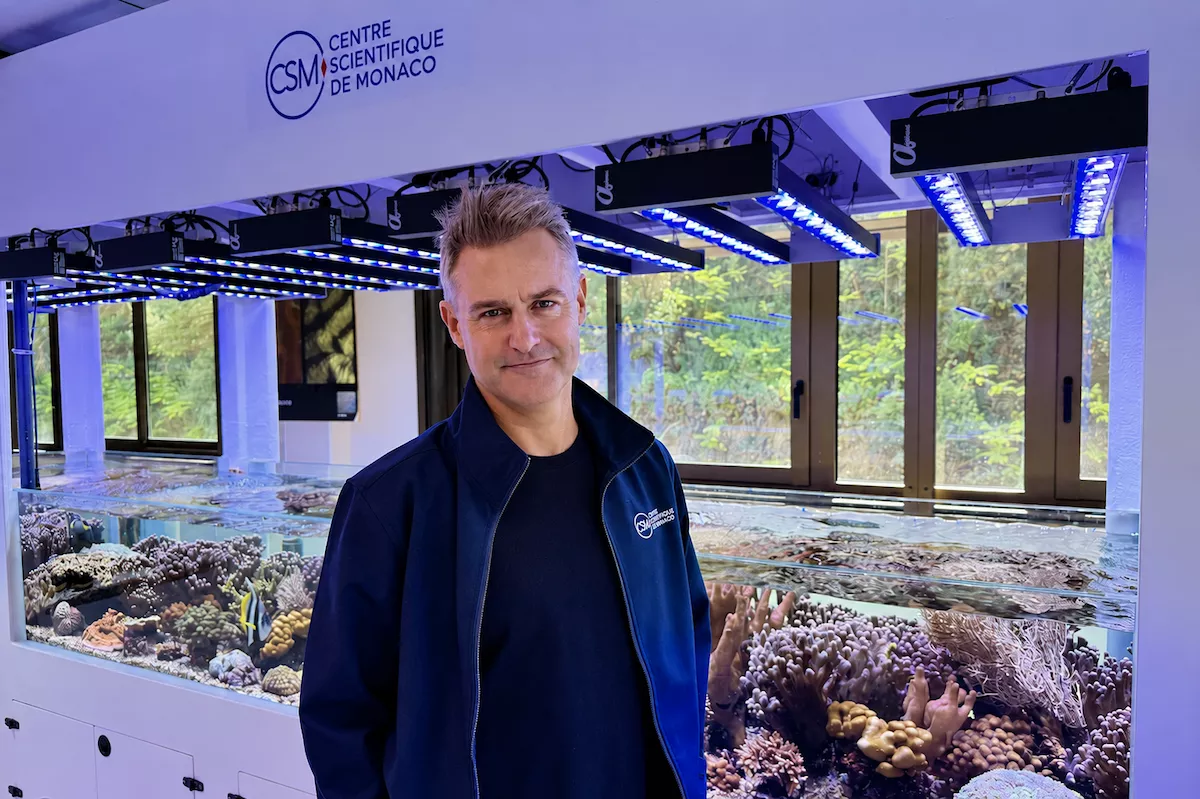
Alexander Venn, co-head of the Coral Physiology Team at the Centre Scientifique de Monaco (CSM), began studying coral reefs more than two decades ago, when the threat posed by climate change was already well understood.
“When I was doing my PhD in 2003, we were already very worried about climate change impacts on coral reefs,” he tells Monaco Life. “But as a young PhD student, I said to myself: it’ll be all right, the grown-ups will sort it out. We’re now in 2026, and the grown-ups haven’t sorted it out.”
‘Dangerously short’
The UN Environment Programme’s annual Emissions Gap Report, published on 21st October, suggests little has changed. Even if every country delivered its latest climate pledges in full, the planet would warm by around 2.6°C by 2100, rising to 2.8°C under the policies actually in place. Global temperatures are already around 1.4°C above pre-industrial levels.
“Emissions remain at record levels. And national climate plans and current policies fall dangerously short,” said UN Secretary-General António Guterres. “The world can no longer avoid overshooting the 1.5 degree limit, and the consequences are already devastating.”
A sea already under strain
Those consequences have been felt in the Mediterranean this year. The sea had its warmest summer on record, according to Mercator Ocean International, with 95% of its surface affected by strong marine heatwaves and parts of the western basin running 2–3°C above average. Researchers at World Weather Attribution concluded that such temperatures would have been virtually impossible without human-caused climate change, and that in a world 2.8°C warmer, heatwaves like this summer’s would be up to a further 1.9°C hotter.
The reason that matters so much for marine life, Venn explains, lies in its biology. Every plant and animal, from seagrass and sponges to fish, depends on proteins and enzymes that work best within a narrow temperature range.
“With the higher temperatures we’re now seeing in the oceans and in the Mediterranean, we’re pushing animals towards the upper limits of their thermal performance. Their growth, their breathing, even their ability to reproduce, all start to fall outside the range in which they function best,” he said.
For the most sensitive species, corals among them, the consequences can be fatal. “There is a point where the temperature becomes too much for them. They simply stop functioning and die,” he explains. Warmer water also allows bacteria and viruses to multiply more quickly, increasing the risk of disease.
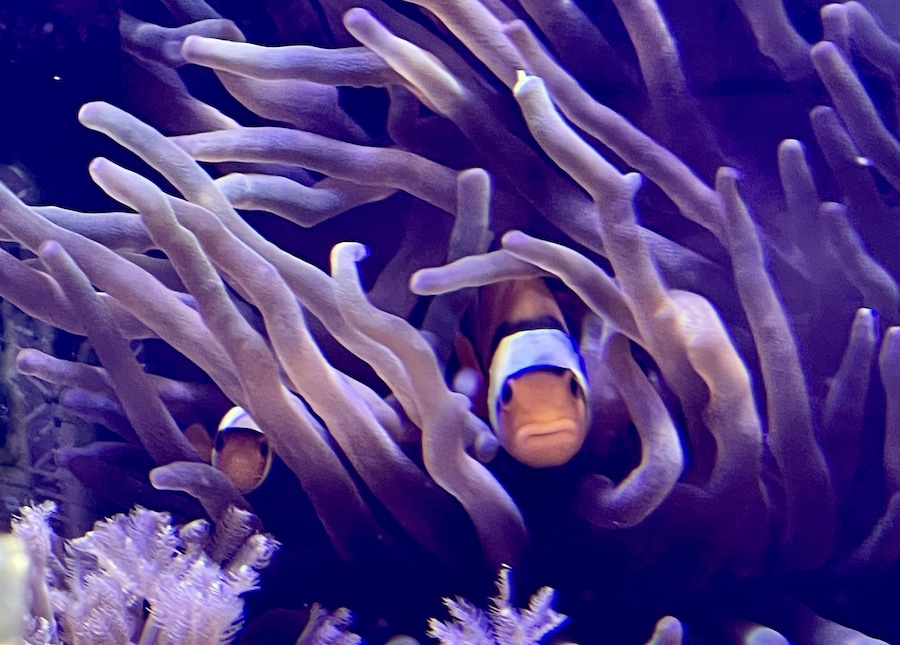
Photo credit: Cassandra Tanti, Monaco Life
No time to recover
Corals can bleach within days or weeks of a heatwave, and die in the months that follow. Some survive and recover, but Venn says the growing problem is that hot years now come one after another, leaving little chance to rebuild.
“When corals bleach, they either recover or they die. The ones that die are gone, smothered by seaweed, and that’s the end of them. The ones that survive have still been weakened, and a year or two later they’re hit by high temperatures all over again,” he says.
Sea temperature records show 2026 above every previous year, with 2025 and 2024 close behind. “Over the last ten years, we’ve had one extreme temperature event after another. That means ecosystems can’t recover, and that is the worry for the future,” Venn says.
Climate scientists have warned that, on the current trajectory, summers as hot as 2026 will soon be considered normal.
Resilience at a cost
Corals have existed for some 250 million years, and their resilience is often cited as a reason for optimism. Venn points out that during that time, reefs have repeatedly been wiped out by climate-driven mass extinctions before slowly returning.
“We can say that life is resilient, but the raw material of adaptation is death and destruction,” he says.
The species that survive do so at the expense of those that die out, much like a forest regrowing after a fire. “Life will bounce back eventually, but only after enormous loss, and not in our lifetime. Our generation, our children and our grandchildren’s grandchildren will all live through that before nature recovers. We have to accept that reality, because it should push us to change our ways. Otherwise, we won’t do anything.”
Grief and determination
That sense of reckoning was shared by scientists at this summer’s International Coral Reef Symposium in Auckland, the world’s largest gathering of coral reef researchers, held every four years. Venn reveals that he had not seen it at this level before.
“There was a real mixture of urgency, grief for everything that’s being lost, and determination to do our very best for reefs despite what’s happening, and to communicate our science so that action can be taken,” he says.
“Coral reefs will change. We know that much. They have already changed over the last 20 years, and over the next 20 those changes will happen much faster. The question is what we can do to safeguard them as best we can.”
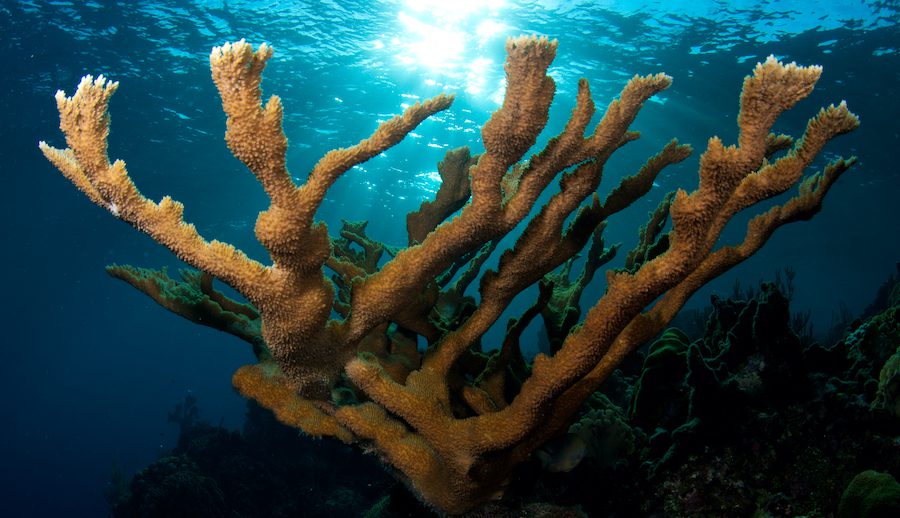
Elkhorn coral (Acropora palmata), photo credit: Erik Brun
What science can still do
At the CSM, that question is being approached from several directions. The most immediate, Venn says, is to reduce the other pressures on the sea that leave marine life less able to cope with heat.
“Environmental protection is vital. Minimising pollution, overfishing and all the other pressures we put on the marine environment will give life the best possible chance,” he explains.
His team is also examining whether better nutrition, including micronutrients, can give corals the energy reserves to withstand heat stress, and what happens to coral health when seawater chemistry is altered to help the ocean absorb more carbon dioxide, a technique known as ocean alkalinity enhancement. Venn stresses that such approaches could never replace cutting emissions.
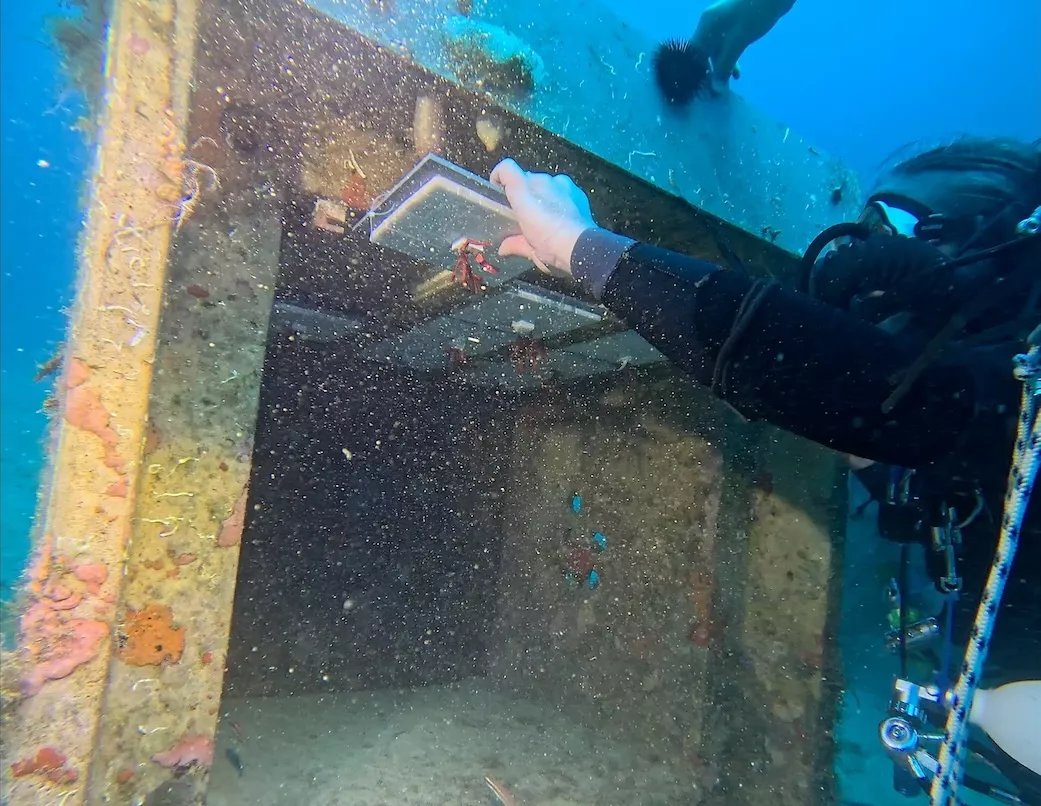
In the artificial coral caves off Monaco, researchers are also studying how Mediterranean red coral reproduces and grows, work that could help restore populations damaged by disease, overfishing or heatwaves. “If we can help red coral reproduce more efficiently when restoring populations, that’s a good thing,” he says.
Whether any of these solutions are used, he adds, is not for scientists to decide. “It’s up to policymakers, politicians and community leaders to decide whether these approaches are taken forward. Our role is to provide the solid scientific facts on which those decisions can be made.”
CSM scientists tending to red coral caves off Monaco’s coastline. Photo source: CSM
‘The climate emergency is now’
The UN report comes ahead of the COP31 climate summit in Antalya, Turkey, next month, where governments will again be urged to close the gap between their promises and what the science requires. Venn believes part of the difficulty is that the threat does not yet feel immediate enough.
“As a species, we tend to respond to immediate emergencies, and that’s a problem. We need to look beyond that to avoid a catastrophe, one that has already begun. We all felt it this summer,” he says.
“I very much hope people realise that the climate emergency is now. It’s happening right now, and it’s affecting the sea, the land and our lives. We have to make some very brave decisions and some compromises. As scientists, we’ll carry on reporting the facts as best we can and do our very best to find solutions that protect coral reefs and the marine environment. But there’s only so much we can do when the pace of change is this rapid.”
Monaco Life is written by qualified journalists, writing original content. Sign up for our free newsletter, listen to our podcasts on Spotify, and follow us across Facebook, Instagram, LinkedIn, and Tik Tok.
Main photo: Alexander Venn, co-head of the Coral Physiology Team at the Centre Scientifique de Monaco (CSM), credit: Cassandra Tanti
Bentley’s electric Torcal S brings a new kind of power to the French Riviera
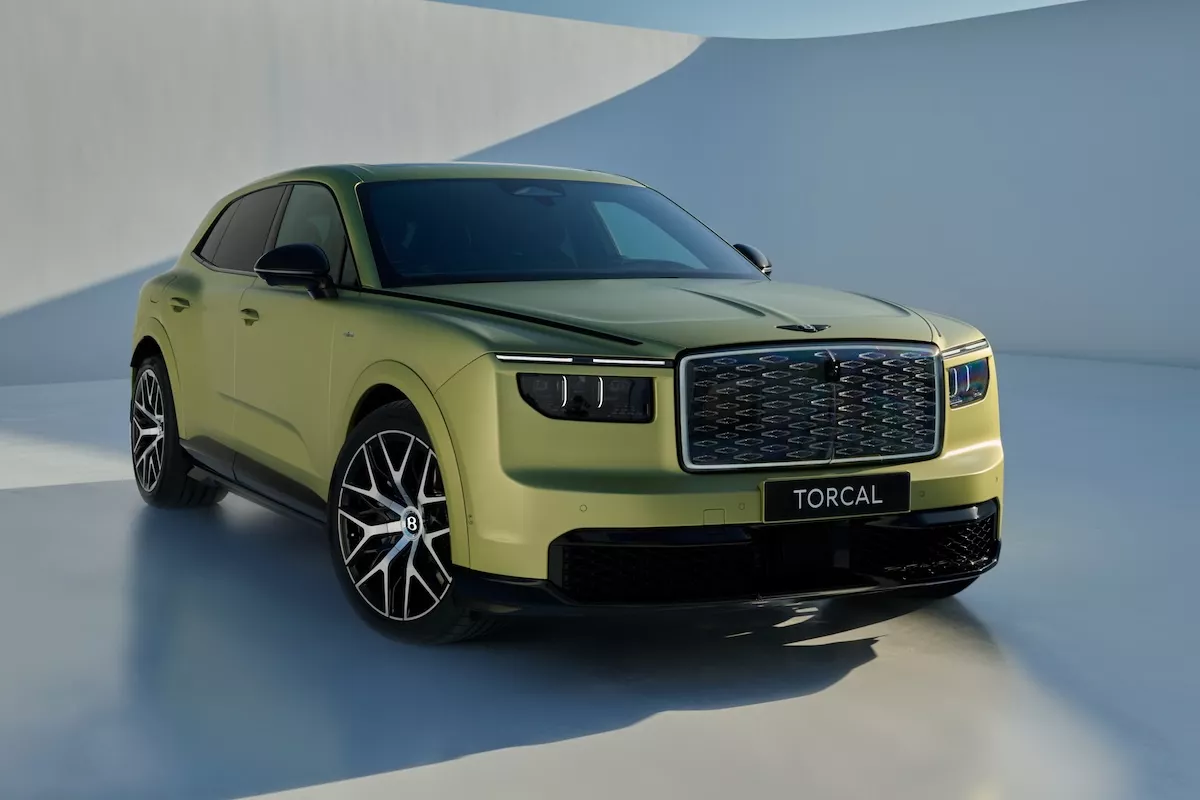
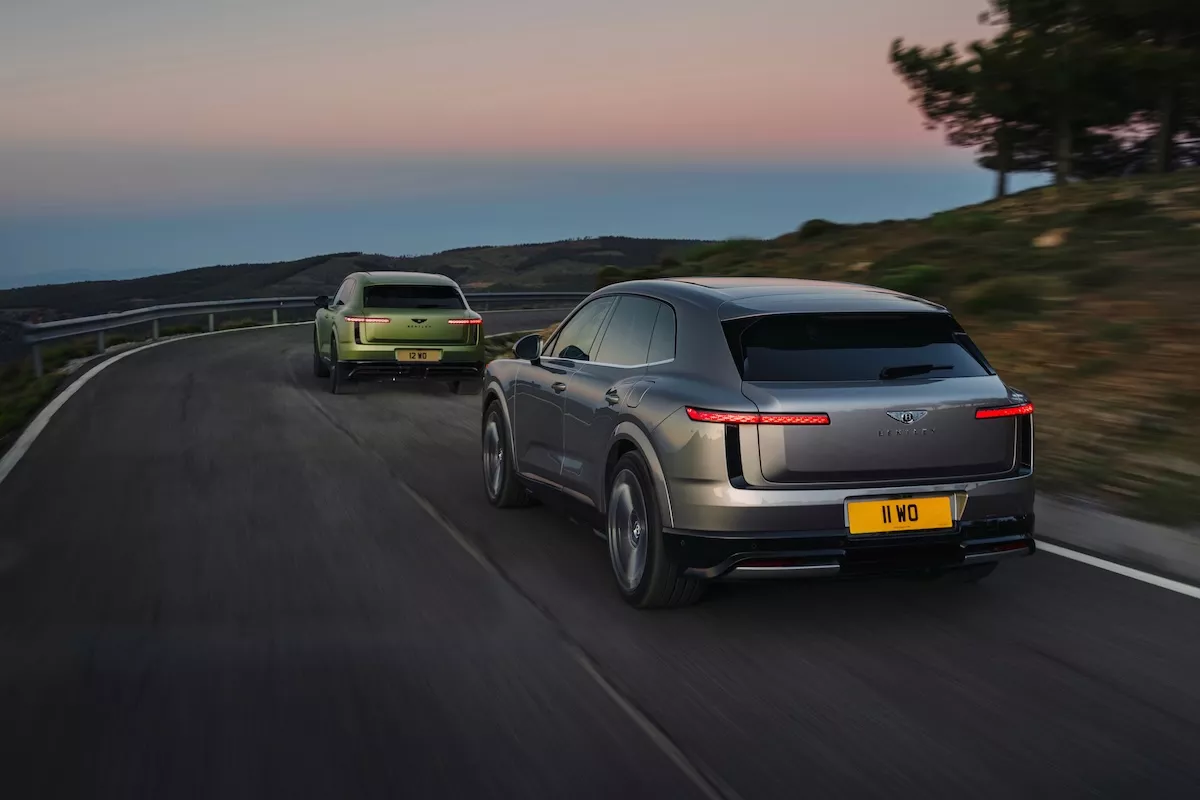
Rain did little to dampen the arrival of Bentley’s first fully electric model on the French Riviera. Following its world premiere in London on 23rd September, the Torcal S took centre stage at a villa in Saint-Jean-Cap-Ferrat, offering a glimpse of a sleeker, more compact Bentley aimed at a new generation of buyers.
Bentley Monaco, in collaboration with BPM Exclusive, took over the property for three days, welcoming clients, partners and media to experience the display model ahead of production.
According to the team presenting the car, this is the first time Bentley has created a dedicated demonstration model of this kind before production, allowing prospective buyers to experience its technology and character in person.
And the detail that made the strongest impression was something you might not expect from an electric car: its sound.
A soundtrack with Bentley muscle
Rather than simply reproducing an engine noise electronically, Bentley worked with musicians using drums, viola and bass guitar to create its “Dynamic Symphony”, inspired by the rhythm of the marque’s 6¾-litre V8.
The result gives the Torcal an audible sense of power from the moment it comes to life. The soundtrack responds to speed and accelerator input, becoming more pronounced in Sport mode. Drivers who prefer silence can switch it off.
There is considerable performance behind that sound. Bentley quotes up to 888 PS for the S with Launch Control active, taking it from 0–100km/h in 2.9 seconds.
Light becomes part of the design
The theatre begins before anyone gets inside. Unlocking the car triggers a welcome sequence, with 76 individually illuminated diamonds gradually lighting up across the front grille, coordinated with the headlights and rear lamps.
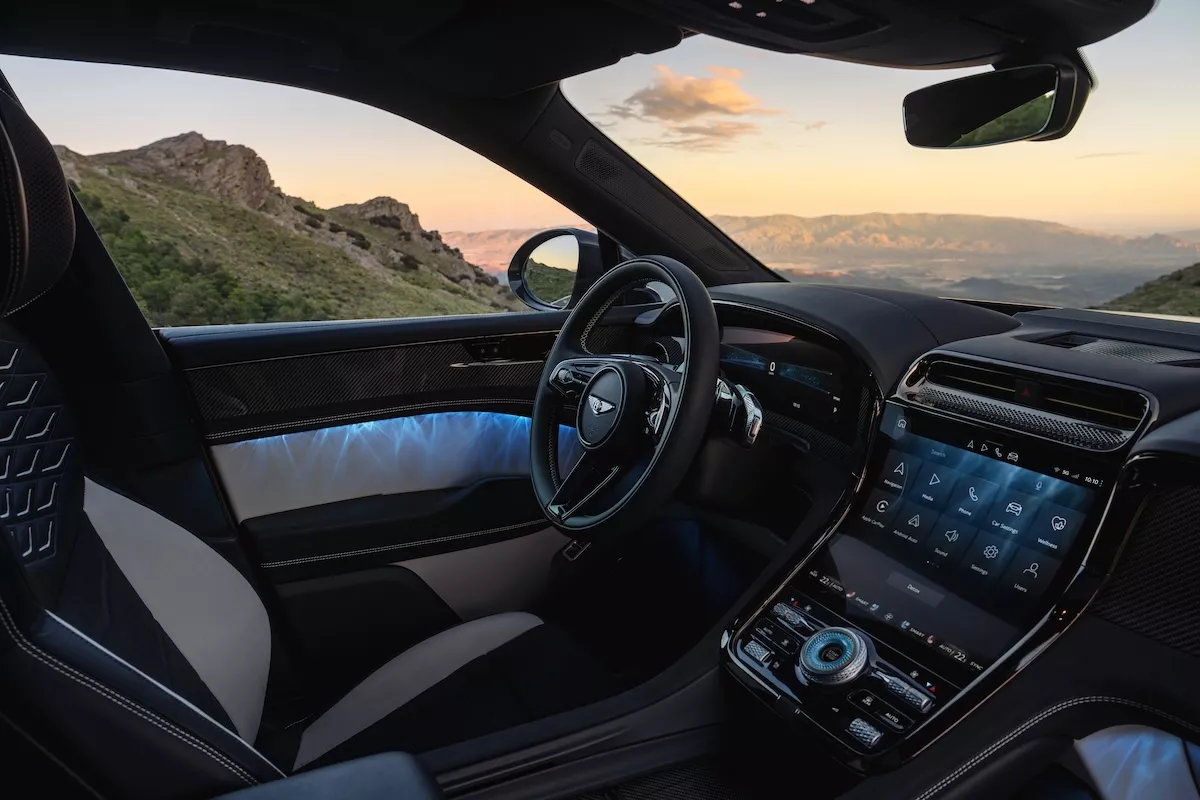
Inside, waterfall lighting flows through the cabin, appearing to respond to acceleration. An adjustable illuminated vanity mirror adds another thoughtful detail, while the optional panoramic roof can switch from clear to frosted glass in sections.
The technology sits alongside familiar Bentley touches: tactile controls, sculpted seats and carefully finished materials. The proportions feel more contemporary, but the emphasis on comfort and craftsmanship remains.
A more manageable Bentley for Monaco
At around five metres long, the Torcal is Bentley’s shortest four-door model. Four-wheel steering reduces its turning circle to approximately 11 metres, a useful combination for Monaco’s streets and car parks. A long wheelbase preserves cabin space, with a 460-litre boot supplemented by storage beneath the bonnet.
Its electric powertrain also comes with a broader rethink of materials. Options include certified Merino wool and a walnut finish made using wood offcuts and recycled paper, bringing environmental considerations into the traditional luxury palette.
“The introduction of the brand’s first fully electric model reflects Bentley’s ability to reinvent itself and explore new directions, while remaining true to what has defined the marque for more than a century: excellence, performance, craftsmanship and a unique vision of automotive luxury,” said Tomas Cordier, General Manager of Bentley Monaco.
On a grey Riviera day, the Torcal S supplied its own light—and a surprisingly compelling soundtrack.
Monaco Life is written by qualified journalists, writing original content. Sign up for our free newsletter, listen to our podcasts on Spotify, and follow us across Facebook, Instagram, LinkedIn, and Tik Tok.
All photos sourced from Bentley Motors
Emirates and Delta lead Forbes air travel awards ahead of Monaco celebration
Emirates and Delta Air Lines have retained their leading titles in Forbes Travel Guide’s 2026 Verified Air Travel Awards, with the winners set to be celebrated in Monaco next February.
Announced on Tuesday 20th October, the third edition recognises airlines, airports and private aviation experiences across 18 categories. Emirates was named Best International Airline and Delta Best U.S. Airline for the third consecutive year.
Delta collected six awards, the largest haul of any carrier, including recognition for its first-class cabin, loyalty programme and Delta One lounge at New York’s John F. Kennedy International Airport.
Singapore Changi took Best International Airport, while New York’s LaGuardia retained the U.S. airport title. Air New Zealand’s Skynest, designed to offer lie-flat rest facilities to economy passengers, received Innovation of the Year.
How the winners were chosen
The results came from an invitation-only survey of nearly 9,000 hospitality industry travellers, including luxury travel advisers, leaders of Forbes Travel Guide Star-Rated hotels, inspectors and training specialists. Forbes Travel Guide validated the results.
The organisation emphasises that these survey-based awards are separate from its Star Ratings, which use professional inspections to assess hospitality establishments.
Monaco prepares to welcome the winners
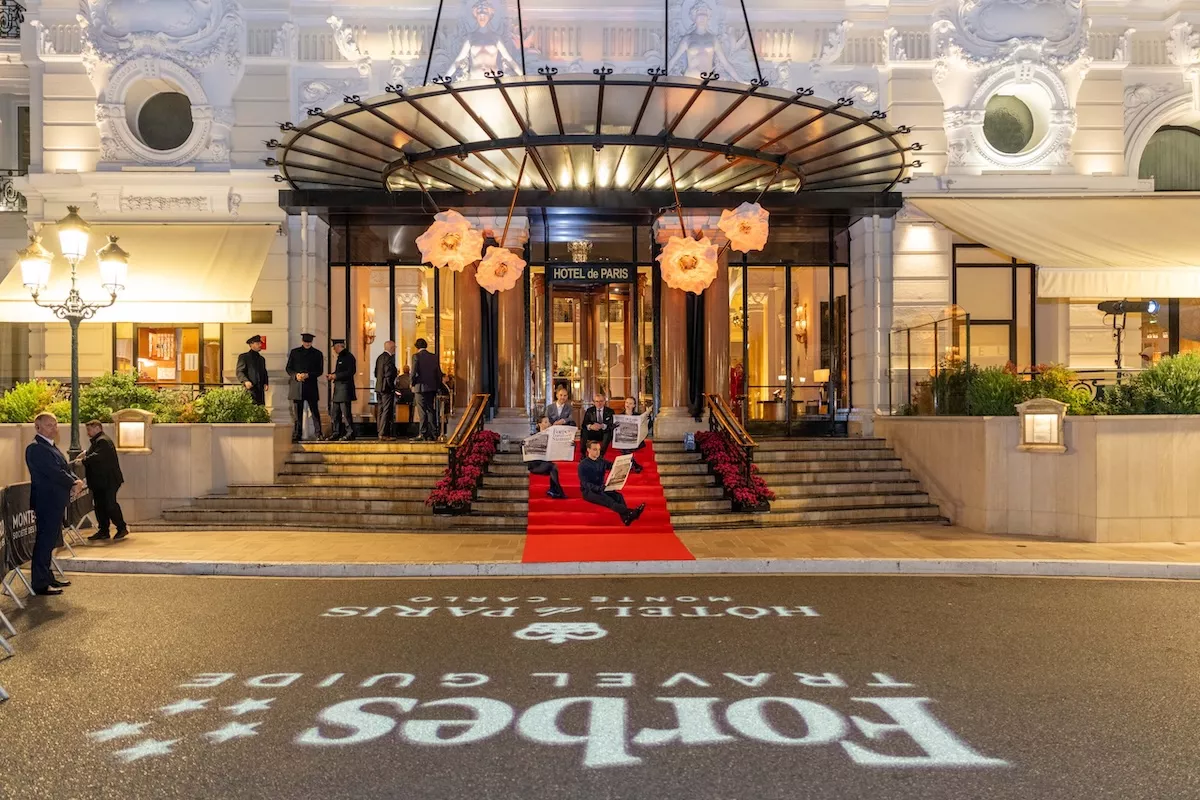
The recipients will be honoured during The Summit, Forbes Travel Guide’s annual gathering of luxury travel and hospitality professionals, taking place in Monaco from 23rd to 26th February 2027.
The published programme includes sessions and networking at the Grimaldi Forum, followed by a gala at Sporting Monte-Carlo on Thursday 25th February.
Monaco Life is written by qualified journalists, writing original content. Sign up for our free newsletter, listen to our podcasts on Spotify, and follow us across Facebook, Instagram, LinkedIn, and Tik Tok.
Photo source: Forbes Travel Summit
All the headlines and highlights from Monaco, direct to you every morning